
Pigmentation and melasma, assessed before anything is treated.
Dark patches, sun spots and uneven tone have different causes and sit at different depths in the skin, so they need different plans. At Omnia every pigmentation plan starts with skin imaging and an assessment, then combines daily home care with in-clinic treatment where it is suitable. Treatment is led by Dr Nicky Potgieter at our clinics in Hilton and Ballito.
Prefer to talk first? WhatsApp us on 082 838 8741. Consultation fees are credited to your plan.
What is the difference between pigmentation and melasma?
Pigmentation is the general term for darker areas of skin caused by extra melanin. It includes sun spots, sun damage and marks left behind after acne or injury. Melasma is one specific type: symmetrical brown or grey-brown patches, usually on the cheeks, forehead, upper lip or jaw, linked to hormones, sun and heat. Melasma can be improved and controlled, but it tends to return without ongoing protection and maintenance, which is why our plans continue after the active treatment phase.
Five kinds of pigmentation, five different plans
Getting the type right is the first decision, because a treatment that helps sun spots can make melasma worse.
Melasma
Hormone and light driven pigmentation that often appears during pregnancy, with hormonal contraception or around perimenopause. Heat and visible light can trigger it, not only sun. Needs a gentle, long-term approach.
Sun spots
Flat, well-defined spots on the face, hands and chest from years of sun exposure. Usually sit higher in the skin and often respond well to in-clinic treatment.
Sun damage
Diffuse unevenness, dullness and mixed brown and red tones, common in KwaZulu-Natal’s strong sun. Often treated together with skin ageing.
Post-inflammatory pigmentation
Dark marks left behind after acne, eczema, injury or an over-aggressive treatment. More common and longer-lasting in deeper skin tones. Calming the cause comes first.
Hormonal and midlife pigmentation
New or worsening pigmentation around perimenopause and menopause. Where hormones are part of the picture, we can involve our Health Lab doctor, Dr Sana Salduker.

We look beneath the surface before we advise
Pigmentation you can see in the mirror is only part of the picture. Our Observ 520x imaging shows pigment that is not yet visible, sun damage, and whether pigment sits near the surface or deeper in the skin. That depth decides which treatments are worth doing.
- Skin Chat (R395, about 30 minutes): imaging, an honest read of your skin and a clear recommendation. The right first step for most people.
- Skin to Bone with Dr Nicky (R950, 60 minutes): for melasma, long-standing or complex pigmentation, or if you have tried treatments before without success. Includes a phased plan and a written summary.
- We ask about the cause: hormones, medication, pregnancy, sun habits, heat exposure and previous treatments, because they change the plan.
What a pigmentation plan can include
Most plans combine several of these. Your plan depends on the type of pigmentation, your skin tone, your history and the time of year.
Daily protection and home care
The foundation of every pigmentation plan. Broad-spectrum sun protection, protection from visible light, and a prescribed home routine chosen from your skin imaging.
- Good for
- All types, and essential for melasma
- Where
- Prescribed at your consultation; products in the Skin Store
Professional depigmentation treatment
A medical-grade, multi-step treatment started in clinic and continued at home under supervision, for stubborn pigmentation and melasma. Only offered after a consultation, because suitability depends on your skin.
- Good for
- Melasma and resistant pigmentation
- Downtime
- Several days of redness and peeling
Medical-grade peels
A course of peels chosen for your skin type to lift surface pigmentation and even tone, with strength adjusted over the course.
- Good for
- Sun spots, sun damage, marks after acne
- Downtime
- None to a few days, depending on strength
IPL
Intense pulsed light targets surface brown spots and redness from sun damage. Not every skin tone or type of pigmentation is suitable, so we assess first.
- Good for
- Sun spots and sun damage in suitable skin
- Not first choice for
- Melasma, and some deeper skin tones
SKN Lab membership
Pigmentation needs maintenance. SKN Lab keeps you on a managed plan with regular reviews and treatments, so results are protected through every season.
- Good for
- Keeping melasma and sun damage under control
- Where
- Hilton & Ballito
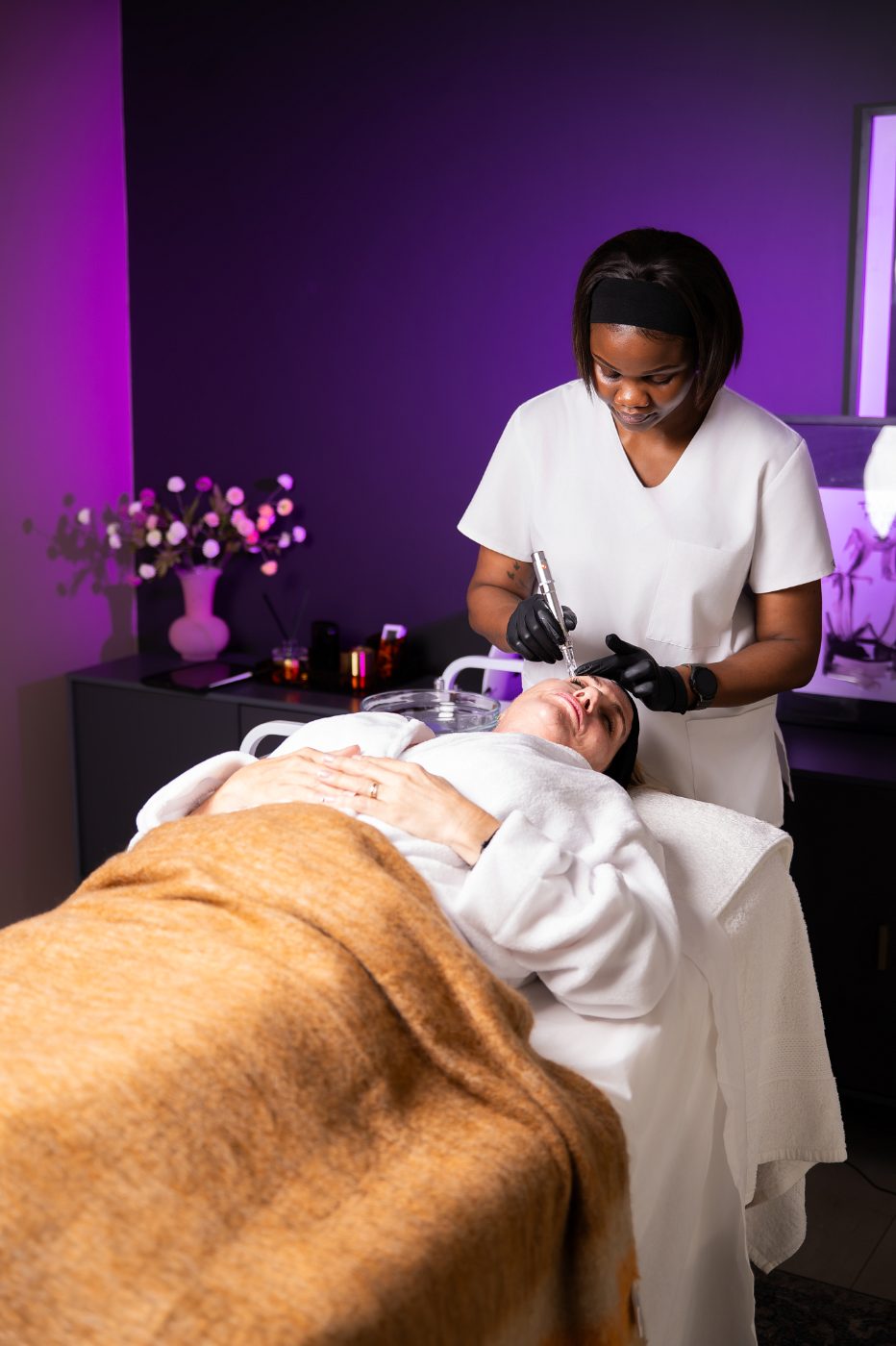
How a pigmentation plan runs
Assess
Skin Chat or Skin to Bone. Imaging, history and a written next step.
Prepare
Two to four weeks of home care and protection, so the skin is ready and treatment is safer.
Treat
In-clinic treatment in phases, reviewed at each visit and adjusted to how your skin responds.
Maintain
Protection, home care and periodic treatment to keep pigmentation from returning, often through SKN Lab.
Pigmentation in deeper skin tones needs a careful plan
Medium and deeper skin tones are more prone to pigmentation and to dark marks after inflammation, including inflammation caused by treatment that is too strong. We choose treatments, strengths and timing for your skin tone, prepare the skin first, and avoid treatments that carry a higher risk for you.
This is one of the most common questions we are asked in Ballito, Umhlanga and Durban North, and the answer is always the same: assess first, then treat gently and consistently.
Two clinics in KwaZulu-Natal
Omnia Hilton
Suite 6, First Floor, Hilton Health, Cnr Monzali Drive & Hilton Avenue, Hilton, 3245
Serving Hilton, Howick, Pietermaritzburg and the KZN Midlands.
Omnia HiltonOmnia Ballito
Suite 25A, The Well, Ballito, 4420
Serving Ballito, Salt Rock, Umhlanga, Durban North and the North Coast.
Omnia BallitoPigmentation and melasma: your questions answered
Who treats pigmentation and melasma in Hilton and Pietermaritzburg?
Omnia in Hilton treats pigmentation and melasma for patients from Hilton, Howick, Pietermaritzburg and the wider Midlands. Treatment is led by Dr Nicky Potgieter and starts with a Skin Chat that includes Observ 520x skin imaging.
Where can I get melasma treatment in Ballito or Umhlanga?
Our Ballito clinic at The Well treats melasma and pigmentation for patients from Ballito, Salt Rock, Umhlanga and Durban North. The same assessment-first approach applies at both clinics.
Can melasma be cured?
Melasma can usually be improved and kept under control, but it is a long-term condition that tends to return with sun, heat and hormonal changes. That is why our plans include a maintenance phase and daily protection after active treatment.
How long does it take to see a difference?
It depends on the type and depth of pigmentation and on how consistently the home routine is followed. Most plans are reviewed every few weeks and run in phases over several months. We do not promise a result or a timeline before we have assessed your skin.
What is the best treatment for pigmentation?
There is no single treatment that suits everyone. Sun spots, melasma and marks after acne respond to different things, and a treatment that helps one can worsen another. The right plan depends on your skin type, skin tone and the cause, which is why we assess first.
How do I get rid of sun damage and pigmentation in my 40s?
In your 40s, sun damage often appears alongside hormonal change and early skin ageing. A plan usually combines daily sun and light protection, a prescribed home routine and in-clinic treatment such as peels or IPL where suitable. If hormones are involved, our Health Lab doctor can be part of your care.
Is IPL safe for pigmentation?
IPL can treat surface sun spots and sun damage in suitable skin. It is not usually the first choice for melasma and carries a higher risk in some deeper skin tones, so we assess your skin before recommending it. IPL is available at both our Hilton and Ballito clinics.
Do chemical peels help pigmentation?
Medical-grade peels can help even out surface pigmentation, sun damage and marks after acne. The type and strength are chosen for your skin, often starting gently and building over a course.
Is pigmentation treatment safe for darker skin?
Yes, when it is planned for your skin tone. Deeper skin tones are more prone to dark marks after inflammation, so we prepare the skin, choose gentler treatments and strengths, and avoid options that carry a higher risk for you.
Why did my pigmentation come back?
The most common reasons are sun or heat exposure, hormonal change, stopping home care too soon, or treatment that was too strong. Pigmentation, especially melasma, needs ongoing maintenance after it has improved.
Can I treat pigmentation during pregnancy or while breastfeeding?
Some treatments and ingredients are not suitable during pregnancy or breastfeeding. Gentle protection and suitable home care can continue, and active treatment is usually planned for later. Tell us at your consultation so we can plan safely.
Does sunscreen alone fix pigmentation?
Daily broad-spectrum sun protection is essential and prevents pigmentation getting worse, but on its own it rarely clears established pigmentation. It is the foundation that makes every other treatment work and last.
How much does pigmentation treatment cost?
Your first step is a Skin Chat (R395) or Skin to Bone with Dr Nicky (R950), and the fee is credited to your plan. Treatment costs depend on the plan you need, and you receive a written plan with prices before you start.
Do I need a doctor for pigmentation treatment?
Many pigmentation treatments are medical-grade and some are only suitable after a clinical assessment. At Omnia, pigmentation plans are clinically led by Dr Nicky Potgieter, and in-clinic treatments are delivered by our qualified team.
Start with a proper look at your skin
A Skin Chat includes Observ imaging and a clear plan. The fee is credited to your first session or plan.
Related: Depigmentation treatment · IPL · SKN Lab · Menopause & hormonal skin · Skin Store