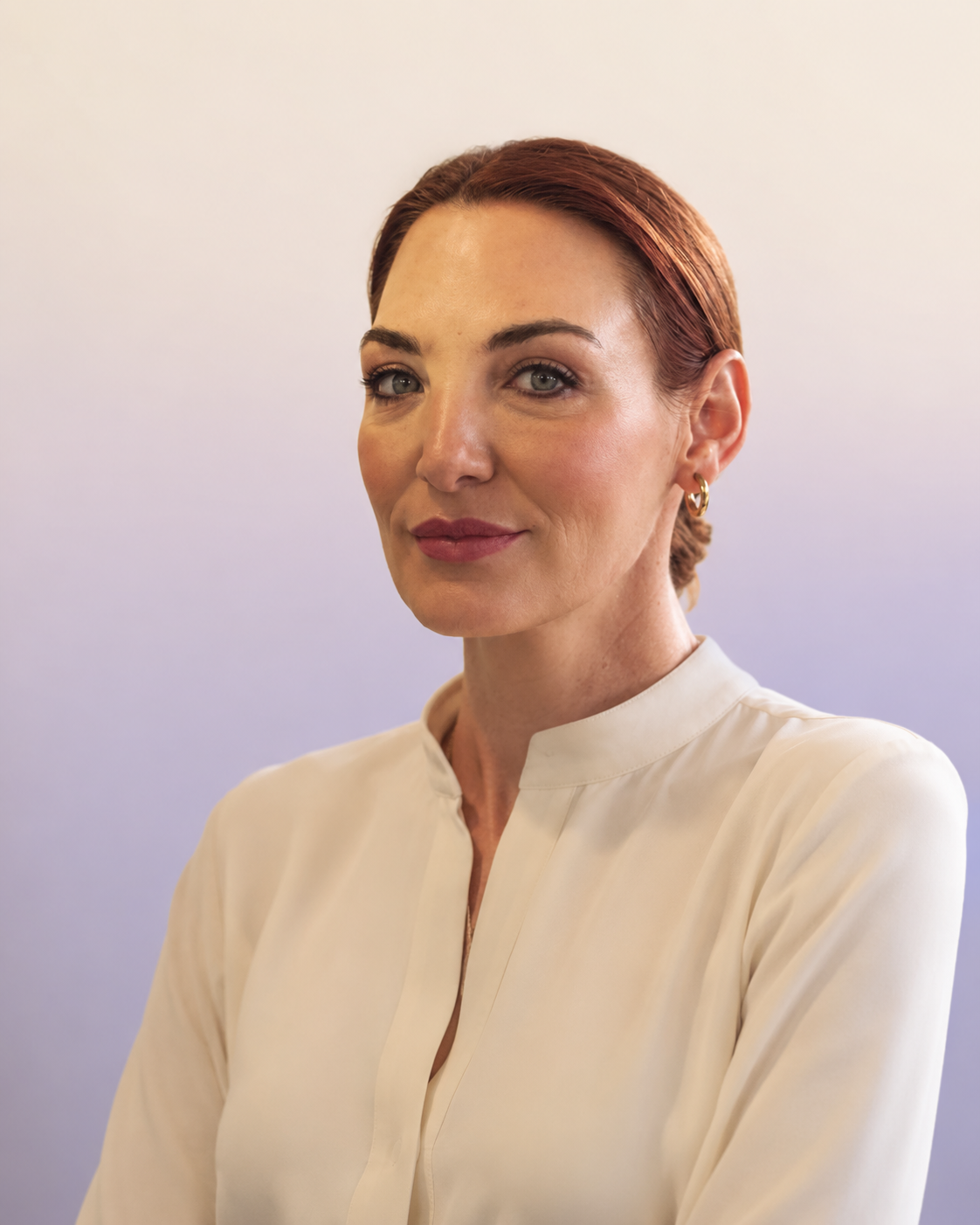
Hair restoration at Omnia is a doctor-led ladder of care, not a single procedure. It starts with a proper medical assessment of why you’re losing hair, then builds the right plan for where you are: clinically-backed home care, in-clinic scalp treatments — and where indicated, FUE hair implants performed by Dr Liam Carey: your own follicles, redistributed under local anaesthetic, with no linear scar and natural, permanent regrowth. For men and women, in Hilton and Ballito.
Most clinics sell you the procedure they offer. We assess first, then meet you on the right rung — and many patients never need the top one.
Daily, evidence-based support for thinning hair — prescribed after assessment, not picked off a shelf. Peptide-based Pelo Baum and Mesoestetic Tricology ranges strengthen, stimulate and slow shedding.
Doctor-led scalp stimulation protocols — targeted infusions and growth-supporting treatments that wake up sluggish follicles and improve scalp health, delivered as a structured course.
Your own follicles, moved one by one from the donor area to where they’re needed — hairline, crown or both. Designed, not just implanted: hairline architecture planned to age naturally with you.
Half our hair-loss conversations are with women — it’s more common than anyone admits, and just as treatable.
The receding temples and thinning crown driven by DHT. The classic FUE candidate — and the earlier it’s stabilised, the less needs transplanting later.
A widening part, a thinner ponytail, more scalp in photos. Under-discussed, emotionally heavy, and very treatable — usually without surgery.
Restored with designed hairline architecture — density, angle and irregularity planned so it reads as grown, never placed.
The spot you only see in other people’s photos. Treated by rung — stimulation first, grafts where density is truly gone.
Hormonal shifts show in hair fast. Medical assessment separates the temporary from the progressive — then treats accordingly.
The best patient we see. Early thinning caught now keeps every option open — often home care and scalp treatments are all you ever need.

Hair loss is a symptom before it’s a cosmetic concern. Iron, thyroid, hormones, stress, medication, scalp conditions — all of them show up in hair first. A transplant into an untreated cause is money planted in bad soil. That’s why every Omnia hair journey starts with a medical assessment, not a sales quote.
When surgery is the right answer, it’s done properly: FUE performed by Dr Liam Carey — individual follicular extraction, no scalpel strip, no linear scar, local anaesthetic, home the same day. And because Omnia is a full aesthetic medicine practice, your plan doesn’t end at the hairline: home care, scalp protocols and reviews carry the result forward.
A transplant is a season, not a day. Here’s the real timeline — including the part most clinics don’t warn you about.
Cause screening, donor evaluation, graft planning and hairline design — agreed together, quoted per case, no surprises.
Fee credited to your plan4–8 hours under local anaesthetic. Follicles extracted and placed one by one. Home the same day; 1–2 days of rest, mild swelling for a few.
Day procedureTransplanted hairs commonly shed — and it’s completely normal. The follicle stays healthy below the surface, resetting into its new growth cycle.
Expected — don’t panicNew growth from month 3–4, visible thickening by month 6, full density at 9–12 months. Permanent — and completely yours to cut, colour and style.
Reviewed along the wayFrom daily home care to full restoration — every level has a clear price, agreed at your assessment.
Pelo Baum & Tricology ranges — prescribed at assessment, delivered from our store
Structured course of in-clinic stimulation sessions, reviewed as results build
Based on grafts needed — full written quote at your assessment, quoted at consultation
Assessment fee is credited in full to your treatment plan. Your complete written quotation is agreed before treatment.
The hair ranges we prescribe are the ranges we stock — clinically-backed, and honest about what home care can and can’t do alone.
After FUE, expect small scabs at graft sites for about a week, mild swelling of the forehead for a few days, and temporary numbness or tightness that settles over weeks. Infection and poor graft survival are uncommon with sterile technique and good aftercare — both of which are part of the programme, not an optional extra. The shed phase in weeks 2–8 is normal and expected; we prepare you for it so it never feels like failure.
Two honest limits. First: a transplant redistributes hair, it doesn’t create more — candidacy depends on donor density, and if yours isn’t enough for the result you want, we’ll say so rather than take the booking. Second: surrounding non-transplanted hair can keep thinning, which is why the plan includes stabilising it — home care, scalp treatments, and where appropriate, medical therapy discussed at assessment.
This page is general information, not medical advice. Treatment decisions are made in consultation with a medical professional. Page medically reviewed by Dr Nicky Potgieter · FUE procedures performed by Dr Liam Carey · Last updated July 2026.
New growth starts at 3–4 months, visible thickening from month 6, and final results at 9–12 months. Hair grows on its own schedule — but it does arrive.
Yes — donor follicles from the back of the scalp are naturally resistant to DHT, the hormone behind pattern loss, and keep that resistance in their new position. Surrounding native hair can still thin, which is why your plan stabilises it too.
It’s done under local anaesthetic — you’re awake but comfortable, and most patients describe pressure rather than pain. Mild tenderness for a few days afterwards is managed with simple analgesia.
FUE extracts follicles individually — no scalpel strip, no linear scar, faster recovery. FUT removes a strip of scalp and leaves a permanent line. Omnia performs FUE exclusively, by Dr Liam Carey.
Quoted per case after assessment, based on the grafts your restoration needs — quoted at consultation. Scalp treatment courses quoted at consultation, and clinical home care from R265. Everything is quoted in writing before you commit.
Yes — female pattern thinning, postpartum and menopausal shedding are common and very treatable, usually starting with cause screening, then scalp treatments and prescribed home care. FUE is an option for suitable female candidates too.
Completely — it’s your own hair. Cut it, colour it, style it as you always have. The hairline is designed from the start to grow and age naturally with you.
Shock shedding in weeks 2–8 is a normal, expected phase — the follicle stays healthy beneath the skin and regrows from month 3. We warn every patient in advance, so it never comes as a surprise.
Earlier than you think. Thinning is far easier to slow than to reverse — catching it early often means home care and scalp treatments are all you ever need, and keeps surgical options open if you want them later.
Omnia offers the full hair restoration ladder at Hilton (Hilton Health, serving Pietermaritzburg and the Midlands), with consultations also available at Ballito on the North Coast. WhatsApp +27 82 838 8741 — we usually reply within five minutes.
A doctor-led look at why your hair is changing, an honest read on your options — and a plan that starts on the right rung, with your assessment fee credited to it.
Omnia · Hilton Health, Hilton Avenue, Hilton, KwaZulu-Natal
WhatsApp (+27) 82 838 8741 · admin@omniahealth.co.za
Book at HiltonOmnia · Ballito, KwaZulu-Natal · Suite 25A, The Well, Corner of Kristy close and Albertina way, Ballito, 4420
WhatsApp (+27) 82 838 8741 · admin@omniahealth.co.za
Book at Ballito