Free delivery on all orders over R750  ·  SKN Lab members save 15%  ·  Hilton & Ballito
Home/Medical Aesthetics/Intense Pulsed Light (IPL)
Light-based treatment · Doctor-led · Hilton & Ballito, KwaZulu-Natal

Intense Pulsed Light.
One light. Two very good reasons.

IPL (Intense Pulsed Light) is a medical-grade, light-based treatment that delivers controlled pulses of energy into the skin, where it’s absorbed by pigment and blood vessels. That one mechanism does two jobs brilliantly: lasting hair reduction, and photorejuvenation — clearing pigmentation, sun damage, redness and uneven tone. At Omnia in Hilton and Ballito, every IPL plan starts with a medical skin assessment, so the settings are calibrated to your skin — never a preset.

Winter is IPL season — less sun means safer, more effective treatment · Consultation fee credited to your first session
Two treatments, one technology

Which IPL are you here for?

Same light, different job. The settings, filters and plan are completely different for each — which is why yours is prescribed, not preset.

Path one

IPL Hair Removal

Light is absorbed by the pigment in the hair follicle, disrupting its growth cycle. Over a course of sessions, regrowth becomes progressively finer, slower and sparser — smooth skin without the razor, the wax or the ingrowns.

  • Face, underarms, arms, legs, bikini line, chest & back
  • 6–8 sessions, 4–6 weeks apart, timed to growth cycles
  • Progressively less regrowth after every session
  • Top-up sessions keep results long-term
Best started in autumn or winter
Path two

IPL Photorejuvenation

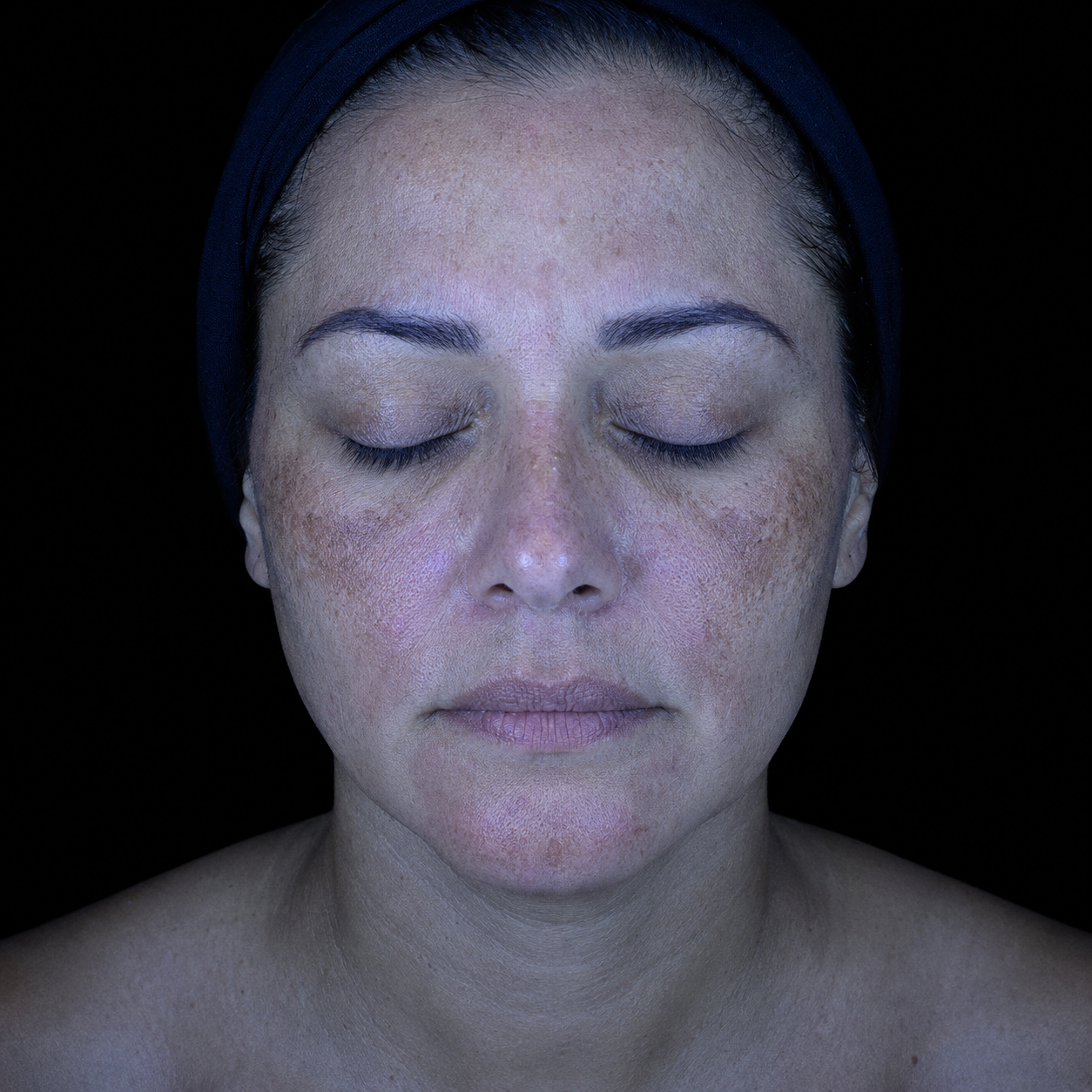
Light targets excess pigment and dilated vessels, breaking down sun damage and redness while gently stimulating collagen. Skin becomes clearer, calmer and more even over a short series — clarity you can’t get from products alone.

  • Pigmentation, sun spots & photo-ageing
  • Redness, flushing & visible vessels
  • Acne-prone skin & uneven tone and texture
  • Face, neck, décolletage & hands · 3–6 sessions
Pairs beautifully with SKN Lab protocols
What it treats

Concerns that live in pigment and vessels.

If the concern is brown or red — the odds are good that light can reach it. These are the concerns we treat most with IPL.

Pigment

Sun damage & sun spots

KZN sunshine leaves its signature. IPL breaks down accumulated sun damage — spots darken briefly, then flake away over about a week.

Pigment

Uneven skin tone

Mottled, patchy tone that make-up can cover but never fix. A short series restores clarity and evenness at the source.

Vascular

Redness & visible vessels

Flushing, broken capillaries and general redness — the light is absorbed by the vessel itself, calming the skin’s background tone.

Congestion

Acne-prone skin

IPL helps calm active breakouts and the red marks they leave behind, as part of a doctor-led plan for congested skin.

Hair

Unwanted hair — face & body

Underarms, legs, bikini line, face, chest and back. Progressively finer, slower regrowth over a structured course.

Overall

Radiance & skin health

Beyond specific spots: IPL’s gentle collagen stimulation leaves skin brighter and healthier-looking overall — the “lit from within” effect.

Observ skin assessment
The honest part

IPL is brilliant — for the right skin. So we check yours first.

IPL works by targeting melanin — which means your skin tone matters as much as your concern. On deeper skin tones, the light can struggle to tell the difference between the pigment we’re treating and the pigment that is simply your skin, raising the risk of burns or post-inflammatory marks. Some clinics treat anyway. We don’t.

Every Omnia IPL plan starts with a medical skin assessment. If IPL is the right tool for your skin and concern, your settings are calibrated precisely to you. If it isn’t, we’ll tell you honestly — and recommend what will actually work, whether that’s a depigmentation programme, a SKN Lab protocol, or nothing at all yet.

  • Medically assessed first — skin type, tone, history and medication all checked
  • Calibrated, not preset — settings tailored to your skin, reviewed as the course builds
  • Sun-safe protocol — 2–4 weeks of sun avoidance before and after, SPF prescribed
  • Honest alternatives — if IPL isn’t your treatment, we’ll point you to what is
What to expect

Assessed, calibrated, built session by session.

1

Skin assessment first

Skin type, tone, concern and history — assessed medically so your plan and settings are right before any light touches your skin.

2

Prep the canvas

No sun, self-tan or active retinoids on the area for the weeks before. Hair removal areas are shaved, never waxed — the follicle must stay in.

3

The session itself

15–45 minutes by area. Each pulse feels like a quick warm flick. Mild redness settles within hours; pigment darkens then flakes away.

4

The course compounds

Hair: 6–8 sessions timed to growth cycles. Skin: 3–6 sessions, monthly. Reviewed as you go, with SPF daily — non-negotiable.

Pricing

Priced per area, planned per course.

IPL is priced by treatment area and session, with course pricing that rewards the consistency the treatment actually needs.

Hair removal

Per area, per session

quoted at consultation

e.g. underarms, lip & chin, bikini line — course packages available

Photorejuvenation

Face, neck, décolletage, hands

quoted at consultation

Single sessions and 3–6 session courses

Combination plans

IPL within your skin strategy

quoted at consult

Sequenced with peels, protocols or depigmentation

Consultation fee is credited in full to your first session. Your complete written quotation is agreed before treatment.

Safety & side effects

The honest version, because you deserve it.

After a session, expect mild redness and warmth for a few hours — like a light touch of sun. Treated pigmentation typically darkens for several days before flaking away; that’s the treatment working, not going wrong. Rarely, blistering, burns or pigment changes can occur — the risk rises sharply with recent tanning, unsuitable skin types, or poorly calibrated settings, which is exactly why Omnia treats only after medical assessment and never on recently tanned skin.

IPL is not suitable during pregnancy, on recently tanned or sunburned skin, over active infection, with certain photosensitising medications (including some antibiotics and isotretinoin), or for some deeper skin tones — where we will recommend a safer alternative instead. Daily broad-spectrum SPF after treatment is essential, and we prescribe it as part of your plan.

This page is general information, not medical advice. Treatment decisions are made in consultation with a medical professional. Page medically reviewed by Dr Nicky Potgieter · Last updated July 2026.

Your questions, answered

IPL FAQ

How does IPL work?

Controlled pulses of broad-spectrum light are absorbed by pigment and blood vessels in the skin. For hair removal, this disrupts the follicle’s growth cycle; for rejuvenation, it breaks down pigmentation and redness while stimulating collagen — treating the cause while leaving surrounding tissue unharmed.

Is IPL suitable for both hair removal and skin rejuvenation?

Yes — that’s its particular strength. The same technology does both, but with completely different settings, filters and plans. Yours is calibrated for its purpose at your consultation.

How many sessions will I need?

Hair removal: typically 6–8 sessions, 4–6 weeks apart, timed to hair growth cycles. Skin rejuvenation: typically 3–6 sessions about a month apart. Confirmed at consultation, reviewed as results build.

Is IPL safe for darker skin tones?

IPL targets melanin, so deeper skin tones need careful assessment — and on some skin types it isn’t the safest choice. We assess first, and if IPL isn’t right for your skin we’ll say so honestly and recommend a safer, more effective alternative.

What does it feel like?

A quick warm flick per pulse — often compared to a small elastic band. No anaesthetic needed for most areas, and any warmth settles within hours.

Is there any downtime?

Minimal — most patients go straight back to their day. Mild redness for a few hours; treated pigment darkens briefly then flakes away over about a week. Daily SPF afterwards is essential.

What areas can be treated?

Hair removal: face, underarms, arms, legs, bikini line, chest and back. Rejuvenation: face, neck, décolletage and hands — where sun damage and redness show most.

Can I have IPL with a tan or in summer?

Recently tanned skin raises the risk of side effects, so we don’t treat it. You’ll avoid sun on the area for 2–4 weeks either side of each session — which makes autumn and winter the ideal IPL season in KZN.

How much does IPL cost?

Priced per area and session, quoted at consultation, with course pricing for hair removal and rejuvenation series. Your plan and exact price are confirmed at your consultation.

Where can I get IPL near Pietermaritzburg or the North Coast?

Omnia treats at two KwaZulu-Natal locations: Hilton (Hilton Health, serving Pietermaritzburg and the Midlands) and Ballito (serving the North Coast). WhatsApp +27 82 838 8741 — we usually reply within five minutes.

Where to next

Often considered alongside

Book a skin assessment

Winter light is the best light. Start your course now.

A doctor-led assessment of your skin and your concern, an honest answer on whether IPL is your treatment — and settings calibrated to you if it is.

Serving Pietermaritzburg & the Midlands

Hilton

Omnia · Hilton Health, Hilton Avenue, Hilton, KwaZulu-Natal

WhatsApp (+27) 82 838 8741 · admin@omniahealth.co.za

Book at Hilton
Serving Ballito & the North Coast

Ballito

Omnia · Ballito, KwaZulu-Natal · Suite 25A, The Well, Corner of Kristy close and Albertina way, Ballito, 4420

WhatsApp (+27) 82 838 8741 · admin@omniahealth.co.za

Book at Ballito