Menopause changes your skin. We look at the whole picture.
Many of the skin changes women notice in their 40s and 50s are hormonal. At Omnia, Dr Sana Salduker looks at your symptoms, hormones, sleep and wellbeing in our Health Lab, and Dr Nicky Potgieter treats your skin, in the same clinic.
Prefer to talk first? WhatsApp us on 082 838 8741.
What does menopause do to your skin?
Oestrogen helps skin make collagen, stay hydrated and repair itself. As oestrogen falls during perimenopause and after menopause, skin usually becomes drier, thinner and less firm, heals more slowly and can become more sensitive. Collagen falls fastest in the first years after menopause: skin loses about 30% of its collagen in the first five years.1 Some women also get breakouts in their 40s or new pigmentation as hormone levels shift. These changes are common and they can be treated.
Where you are in the change affects what helps
Perimenopause
Usually from the early to mid 40s, sometimes earlierThe years before periods stop, when hormone levels rise and fall unevenly. Periods become irregular and symptoms can come and go. Many women first notice skin, sleep and mood changes here.
Menopause
Confirmed after 12 months without a periodThe point when periods have stopped for a year. The average age of menopause is around 51–52, but this is variable.
After menopause
The years that followOestrogen stays low. Some symptoms ease, while changes in skin, bone health and vaginal comfort often continue and benefit from ongoing care.
Common symptoms people bring to a Health Lab consultation
Six skin changes linked to hormones
Dryness and a weaker skin barrier
Skin makes less oil and holds less water, so products that used to suit you may now sting. Barrier repair comes first.
Thinning and loss of firmness
Less collagen means thinner skin, finer lines and less support along the jaw and neck. Collagen-stimulating treatments can help.
Hormonal breakouts in your 40s
Shifting hormone levels can bring breakouts, often around the jaw, even if you never had acne before. Treated gently, with your skin barrier in mind.
Pigmentation and melasma
Hormonal change can trigger or worsen pigmentation. Our pigmentation and melasma guide explains how we assess and treat it.
Sensitivity and redness
Hot flushes and a weaker barrier can leave skin reactive. We choose treatments and strengths with that in mind.
Thinning hair
Hair can thin as hormones change. Our Hair Lab with Dr Liam Carey starts with finding the cause.
Your hormones and your skin, in one clinic
Most clinics treat either menopause or skin. We do both.
The whole-body side
- A longer, unhurried consultation about your symptoms, history and lifestyle
- Menopause and hormonal health, sleep, mood, anxiety and burnout
- Metabolic health and body composition
- Blood tests where they will change the plan
- Treatment options explained, including hormone therapy where it is suitable for you
- Referral to a gynaecologist, psychologist or other specialist when needed
The skin side
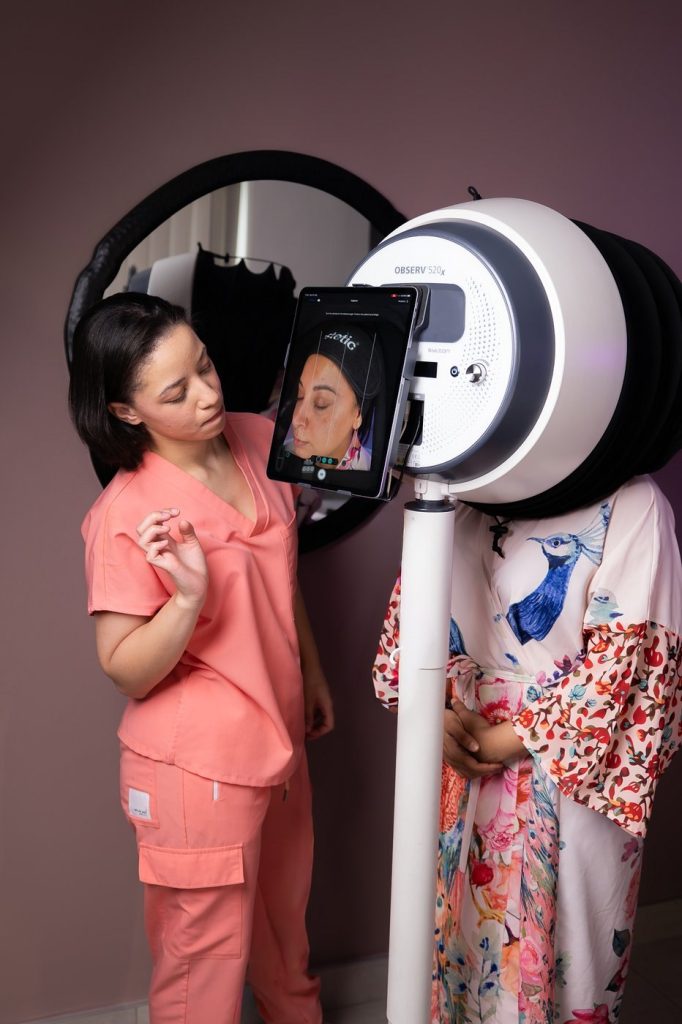
- Skin assessment with Observ 520x imaging
- Barrier repair and a prescribed home routine for your skin as it changes
- In-clinic treatments to support collagen and firmness, chosen for your skin
- Care for hormonal breakouts and pigmentation
- Ongoing care through SKN Lab membership
From first appointment to a plan that fits
Start with either doctor
A Health Lab consultation with Dr Sana, or a skin assessment with Dr Nicky: Skin to Bone (R950, 60 minutes) or a Skin Chat (R395, about 30 minutes), with Observ imaging.
One shared plan
With your consent, the two doctors share notes, so your plan covers your symptoms, your skin and what to do at home.
Review
Hormonal change takes time, so we review and adjust the plan as your body changes.
What a menopause skin plan can include
Every plan starts with protecting and repairing the skin. In-clinic treatment is chosen at your assessment.
Barrier repair and daily protection
Gentler cleansing, richer moisturisers and broad-spectrum sun protection, prescribed for your skin at this stage.
- Good for
- Dryness, sensitivity, itch
- Where
- Prescribed at consultation; products in the Skin Store
Collagen stimulation
Treatments that encourage your skin to make more of its own collagen over a course of sessions.
- Good for
- Loss of firmness, crepey skin
- Downtime
- Usually little; discussed at consultation
Skin boosters
Hydrating injectable treatments that improve skin quality and moisture from within.
- Good for
- Dull, dehydrated skin
- Downtime
- Small marks for a day or two
Medical-grade peels
Gentle, adjusted peels for breakouts, uneven tone and texture, with strength chosen for your skin.
- Good for
- Hormonal breakouts, uneven tone
- Downtime
- None to a few days
SKN Lab membership
A managed skin plan with regular reviews and treatments, so care keeps pace as your skin changes.
- Good for
- Long-term care through the transition
- Where
- Hilton & Ballito
Two clinics in KwaZulu-Natal
Omnia Hilton
Suite 6, First Floor, Hilton Health, Cnr Monzali Drive & Hilton Avenue, Hilton, 3245
Serving Hilton, Howick, Pietermaritzburg and the KZN Midlands.
Omnia HiltonOmnia Ballito
Suite 25A, The Well, Ballito, 4420
Serving Ballito, Salt Rock, Umhlanga, Durban North and the North Coast.
Omnia BallitoMenopause and your skin: your questions answered
Where can I see a doctor about menopause and skin changes in Pietermaritzburg or Hilton?
Omnia Hilton sees patients from Pietermaritzburg, Howick and the KZN Midlands for both menopause and hormonal health with Dr Sana Salduker, General Practitioner, and skin care with Dr Nicky Potgieter.
Is there a menopause doctor in Ballito or Umhlanga?
Yes. Dr Sana Salduker, General Practitioner, sees patients for menopause and hormonal health at Omnia Ballito, The Well, which serves Salt Rock, Umhlanga and Durban North.
Do I need blood tests to know if I am in perimenopause?
Not always. Perimenopause is often recognised from your age and symptoms, because hormone levels change from day to day. A doctor may suggest blood tests based on your individual clinical scenario.
Can HRT help my skin?
For some women, hormone therapy improves skin hydration and thickness as well as symptoms such as hot flushes. Whether it suits you depends on your age, history and preferences, and it is only considered after a full consultation.
What if I cannot or do not want to take HRT?
There are other options for symptoms such as hot flushes, sleep and mood, and the skin treatments on this page do not depend on hormone therapy. Your Health Lab consultation covers the choices that fit you.
Do menopause skin treatments work on all skin tones?
Yes, when they are planned for your skin. Deeper skin tones are more prone to pigmentation after irritation, so we choose treatments and strengths carefully and prepare the skin first.
How much does a menopause consultation cost?
The Health Lab consultation fee is confirmed when you book. Skin to Bone with Dr Nicky is R950 and a Skin Chat is R395, credited to your plan. You receive a written plan with prices before any treatment.
Should I see a gynaecologist or a GP for menopause?
Many women start with a GP, who can assess symptoms, discuss treatment and refer to a gynaecologist when it is clinically indicated.
Start with one conversation
Book a Health Lab consultation for symptoms and hormones, or Skin to Bone if your skin is the main concern.
Related: Pigmentation & melasma · Health Lab · Collagen stimulation · SKN Lab · Hair Lab
1. Brincat M, et al. A study of the decrease of skin collagen content, skin thickness, and bone mass in the postmenopausal woman. Obstetrics & Gynecology, 1987.
This page is general information, not medical advice. Treatment decisions are made with your doctor after a consultation.