I have always found it quite interesting how society decides which parts of ageing we're allowed to do something about, and which parts we're apparently just supposed to accept.
We colour our grey hair, paint our nails, wear makeup and spend money on skincare, gym memberships and supplements. We seek medical help for menopausal symptoms, changes in metabolism and declining bone health.
And rightly so, where these interventions are appropriate.
But mention anti-wrinkle injections or dermal fillers and suddenly the conversation changes. Now we're vain, unnatural and apparently not ageing gracefully.
Since when did ageing gracefully mean doing absolutely nothing to support ourselves as we get older?
I don't believe ageing is something we should fight. We are all going to age and, quite frankly, we're fortunate if we get the opportunity to do so. But I also don't believe we should feel guilty about wanting to look good while we're doing it.
The person in the mirror doesn't always reflect the person inside.
This is something I see in my consulting rooms in Hilton and Ballito all the time.
A patient sits down and tells me she's happy. She's healthy, doing well in her career, her children are growing up and she has a little more freedom. She's exercising and, in many ways, feels better than she did ten years ago.
But when she looks in the mirror, she sees someone who looks tired, angry or sad. And she doesn't feel any of those things.
Then there's the woman on the other side of the spectrum.
She's in the thick of perimenopause. Her hormones seem to have a mind of their own, her sex drive has plummeted, she's got a short fuse and some days she genuinely feels a little unhinged.
And as if that isn't enough, the skin she's spent years looking after has suddenly decided to behave like it did when she was 15. She's dealing with breakouts, changes in skin texture and a complexion that seems to have lost its radiance.
She's trying to navigate these changes while managing her career, her family and everything else life throws at her. And now she looks in the mirror and sees exactly how she's feeling. Tired, frustrated and not quite herself.
Can we really blame her for wanting to look in the mirror and recognise the woman she once knew?
Not necessarily a younger woman. Just a version of herself that feels familiar.
Of course, when hormonal changes are contributing to how someone feels, we need to address those too. Aesthetic treatments cannot correct the underlying hormonal changes of perimenopause. That's why our approach through Omnia's Health Lab considers the broader medical picture, including hormonal health and its effects on the skin.
Whether you're feeling better than ever or struggling through a stage of life you weren't quite prepared for, I think we all want something similar: to look in the mirror and feel like ourselves.
And I don't think that's too much to ask.
Ageing is about more than wrinkles.
We now understand that facial ageing involves changes across multiple anatomical structures.
Our facial bones remodel, fat compartments change, and we lose some of the structural support that gives our faces their shape. Our skin changes in texture, elasticity and quality, and the relationship between these structures changes over time.
So when someone tells me, "I just don't look like myself anymore," there may be genuine anatomical changes contributing to what they're seeing.
That doesn't mean they need treatment. But understanding those changes and choosing to address some of them shouldn't automatically be labelled vanity.
Here's what the psychology tells us.
We like to believe appearance doesn't matter. That people are judged on their character, intelligence, experience and ability.
And of course, they should be.
But that's not always how human psychology works.
A 2026 review by Anderson and colleagues, published in Aesthetic Surgery Journal Open Forum, examined 61 studies exploring facial aesthetic surgery, attractiveness bias and professional outcomes.
Across the research, photographs taken after facial procedures were often rated more favourably for attractiveness, competence, trustworthiness and intelligence.
Think about that. The person's actual intelligence, qualifications and experience hadn't changed.
But people's perception of them had.
A 2019 study by Dossinger and colleagues in the Journal of Vocational Behavior also found that physical attractiveness was associated with early-career salary through greater workplace visibility and sponsorship.
Now, this doesn't mean having aesthetic treatment will get you promoted or increase your salary. The research doesn't establish that. But it does demonstrate that appearance can influence how people are perceived and treated, sometimes in ways we don't even realise.
And I think that's worth acknowledging.
But what about how we feel about ourselves?
For me, this is the more important part of the conversation.
Because appearance isn't only about how other people see us. It's also about how we see ourselves.
A 2026 review by Alain Michon, published in JPRAS Open, examined 31 studies on the psychological and quality-of-life outcomes associated with facial aesthetic injectables.
The review found generally favourable associations with self-perception, psychological wellbeing, social functioning and appearance-related quality of life, although the quality and consistency of the evidence varied.
In a smaller prospective study published in Plastic and Reconstructive Surgery – Global Open, 35 patients were assessed before and two weeks after injectable treatments. Researchers found improvements in psychological and social functioning, together with reductions in appearance-related distress.
These findings are encouraging, but I think we need to be careful about how we interpret them.
An earlier University of Pennsylvania review, published in JAMA Dermatology in 2013, highlighted how limited the high-quality evidence was at that time. Many studies lacked control groups or adequate follow-up. More research has emerged since then, but not every patient benefits psychologically, and treatment certainly isn't a solution to every concern someone may have about their appearance.
Still, for appropriately selected patients, there is evidence that the benefits may extend beyond the physical result.
And this is where the research becomes particularly fascinating.
In 2012, Wollmer and colleagues published a small randomised controlled trial in the Journal of Psychiatric Research, investigating whether botulinum toxin injections into the muscles responsible for frowning could influence symptoms of depression.
At six weeks, depression scores had decreased by an average of 47.1% in the treatment group compared with 9.2% in the placebo group.
Now, before anyone misunderstands me, this was a small study, and botulinum toxin is not an established replacement for evidence-based depression treatment.
But the research raises an intriguing question about the relationship between facial expression and emotional experience.
We know our emotions influence our facial expressions. Could changing those expressions, under certain circumstances, also influence how we feel?
It's a fascinating area of research, and one that makes the conversation about aesthetic medicine rather more complex than simply asking whether someone is being vain.
The problem isn't the treatment. It's the judgement.
I often use the analogy of a good hairdresser when explaining this to patients.
You can walk into a salon and have the most beautiful cut and colour. The colour complements your skin, the cut frames your face and the style suits your personality and features. You walk out looking incredible, but still completely like yourself.
Or you can walk out with a colour that's far too intense, a cut that doesn't suit your face and a style that looks fantastic on somebody else but absolutely awful on you.
Aesthetic medicine is much the same.
Neuromodulators, fillers, biostimulators and surgery are tools. They can achieve beautiful results when used appropriately by practitioners who understand facial anatomy, proportions, ageing and, most importantly, the person sitting in front of them.
They also carry risks, even in experienced hands. Good clinical judgement means understanding those risks, recognising when treatment is inappropriate and knowing when to say no.
I don't believe the goal should be to give everyone the same lips, the same cheeks or the same perfectly smooth forehead.
That's not rejuvenation. That's creating a template.
And quite frankly, I don't want my patients to look like a template.
Good aesthetic medicine should make people wonder.
My personal preference has always been for results that are subtle but significant.
I want my patients to look like themselves. Perhaps their skin looks healthier, they look a little more rested or their features appear softer and more balanced.
I love the idea of someone seeing a friend and saying, "You look amazing! Have you been away?" Or wondering whether she's changed her makeup, had her hair done or is simply having a particularly good week.
Perhaps they suspect she's had something done, but they can't quite work out what.
That's the result I aim for.
Not because there's anything morally wrong with someone choosing a more obvious aesthetic result. That's their choice. But because, for me, good aesthetic medicine should enhance the person who's already there.
And that requires restraint.
It's why I believe the consultation matters as much as the treatment.
When someone comes to see me, I don't simply want to know which wrinkle bothers them or which injectable they've decided they need.
I want to understand their medical history, what has changed, what they're hoping to achieve and whether their expectations are realistic.
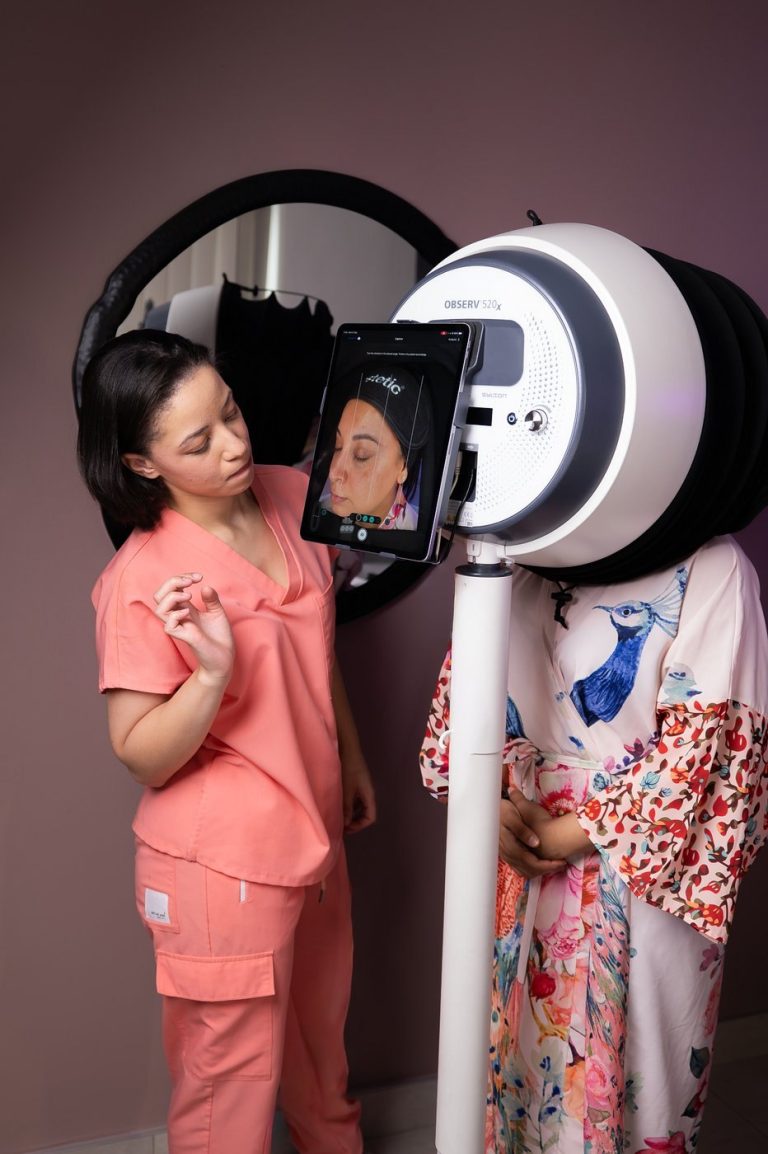
Then we assess the face as a whole, from skin quality and facial movement to volume, structure and proportions. At Omnia, we call this our Skin-to-Bone approach.
Sometimes improving skin health is the most important first step. Sometimes a combination of carefully selected treatments makes more sense than relying on one injectable. And sometimes, after considering everything, I tell a patient that I don't think they need the treatment they've come in asking for.
I don't see that as turning business away. I see it as doing my job.
So, what does ageing gracefully actually mean?
If ageing gracefully means accepting that our bodies will change, that we won't look 25 forever and that our worth isn't determined by how young we appear, then I'm completely on board.
But if it means we shouldn't colour our hair, improve our skin, soften our wrinkles or restore some of the facial support we've lost over time, simply because we're supposed to accept every visible change without question, then I disagree.
Modern medicine has given us options. Not to stop time, guarantee youth or suggest that ageing is a disease we need to cure, but to support our health, wellbeing and, where we choose, our appearance as we move through life.
Some people will choose aesthetic treatments. Others won't. Neither choice makes someone more authentic or more graceful than the other.
What matters is that we're making informed decisions for ourselves, rather than allowing society to decide what ageing should look like.
I don't want to make people look younger at any cost. I want to help them look as good as they feel, without losing the face that makes them who they are.
I don't believe ageing gracefully and aesthetic medicine are opposites. I believe they can exist very comfortably together.
And perhaps the next time we see someone looking particularly good for her age, instead of wondering what she's had done, we should simply appreciate that she looks good.
Surely that's allowed?
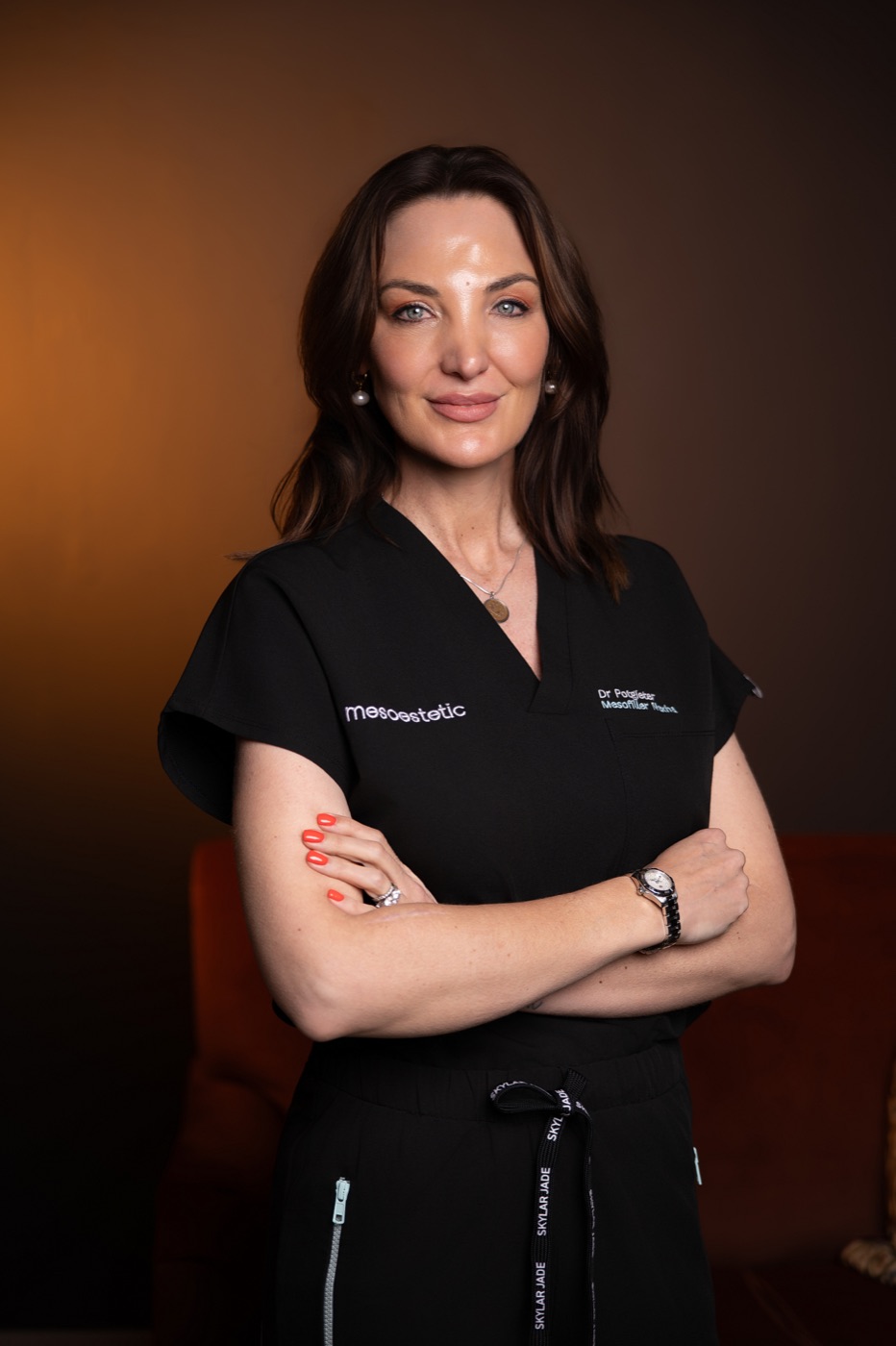
Dr Nicky Potgieter
Omnia | Medical Aesthetics, Skin Health & Wellness
Good medicine begins with better questions.
Have a question you'd like Dr Nicky to answer? Send it to the Omnia team, or book a consultation at our Hilton or Ballito practice.
Frequently asked questions
Is it vain to get anti-wrinkle injections?
Not necessarily. People choose aesthetic treatments for different reasons, including wanting to soften facial lines or feel more comfortable with their appearance. The important considerations are realistic expectations, appropriate treatment and informed choice.
Will I still look like myself after aesthetic treatment?
That should be a central part of the consultation. A carefully considered treatment plan can aim to preserve your natural features and expressions, although results vary and no outcome can be guaranteed.
What does ageing gracefully actually mean?
Ageing gracefully doesn't have to mean avoiding all aesthetic treatments. It can mean accepting the natural ageing process while making informed choices about how you care for your health, skin and appearance.
How do I know whether I need aesthetic treatment?
You may not need any. A medical aesthetic consultation can help assess your concerns, explain the available options and determine whether treatment is appropriate. Choosing not to treat is also a valid outcome.
References
- Anderson JL, et al. (2026). From Nose Job to a Better Job: A Scoping Review of Facial Aesthetics, Attractiveness Bias, and Outcomes in the Workplace. Aesthetic Surgery Journal Open Forum. Source
- Dossinger K, Wanberg CR, Choi Y, Leslie LM. (2019). The beauty premium: The role of organizational sponsorship in the relationship between physical attractiveness and early career salaries. Journal of Vocational Behavior. Source
- Michon A. (2026). Beyond the needle: psychosocial and quality-of-life outcomes following facial aesthetic injectable treatments. JPRAS Open. Source
- McKeown DJ. (2021). Impact of Minimally Invasive Aesthetic Procedures on the Psychological and Social Dimensions of Health. Plastic and Reconstructive Surgery – Global Open. Source
- University of Pennsylvania (2013). Penn Study: Limited Evidence That Facial Procedures Improve Quality of Life. Summary of a systematic review published in JAMA Dermatology.
- Wollmer MA, et al. (2012). Facing depression with botulinum toxin: a randomized controlled trial. Journal of Psychiatric Research. Source
Every Journal article is written or reviewed by our medical team. This is general information, not medical advice: for your skin specifically, book a consultation at our Hilton or Ballito practice.