I find it quite amusing that we've reached a point in aesthetic medicine where some people believe the ultimate measure of a successful anti-wrinkle treatment is whether they can still move their forehead.
If nothing moves, apparently the treatment worked. If you can still raise an eyebrow, perhaps you didn't have enough.
But is that really what we're trying to achieve?
Some patients absolutely love a very smooth forehead with minimal movement. Others are terrified of looking frozen and want to soften their lines without anyone noticing they've had treatment. Neither patient is wrong, but they shouldn't automatically receive the same treatment.
We're treating faces, not following a recipe.
One of the most important things I've learnt over years of injecting is that no two faces behave in exactly the same way.
We have different muscle strengths, facial proportions, brow positions, degrees of asymmetry and patterns of movement. We also have different ages, expectations and ideas of what looking good means.
A 28-year-old wanting to soften early expression lines may need a completely different approach from a 55-year-old whose forehead muscles are helping support her brows. Even two patients of the same age with similar-looking wrinkles may need different doses and injection patterns.
When you sit in my chair, I assess your face at rest and in movement. I look at how your muscles interact, whether one brow sits higher than the other, whether your forehead is compensating for changes around your eyes and what your natural expression looks like.
I want to understand what bothers you, but also what you love about your face and what you don't want to lose.
Because a successful result isn't necessarily the absence of movement. It's achieving the outcome we've agreed on without unnecessarily compromising the expressions that make you recognisably you.
Sometimes movement is exactly what we want.
Botulinum toxin temporarily reduces the activity of selected muscles. Depending on the dose, placement and individual response, we can soften movement or reduce it more substantially.
We can also use it to address certain muscular asymmetries. Perhaps one brow naturally lifts more than the other, or one side of the face has a stronger pull. In appropriately selected patients, carefully placed injections can improve that balance.
Of course, perfect symmetry doesn't exist, and it shouldn't be the goal. Some asymmetry is part of what makes a face interesting.
We also need to consider age and anatomy. A completely immobile forehead on one person may look perfectly acceptable to them, while on another it may make the brows appear heavy or create an unnatural expression.
I don't want to make every patient look like the same shiny, expressionless model. That's never been what my practice is about.
My goal is to make you look refreshed, not to erase your ability to express yourself.
You’re buying results, not units, millilitres or vials.
This is something I wish more patients understood.
Aesthetic medicine has become so commercialised that we often talk about treatment in quantities. How many units am I getting? Can I have the full millilitre? There's still some product left, can't we just use it?
I understand the question. You're spending your money and naturally want to know what you're paying for.
But the quantity of product is not the measure of a good result.
The same applies to botulinum toxin, biostimulators and every other injectable treatment. You need the dose, placement and amount that are appropriate for your anatomy and the result we're trying to achieve. Not what your friend had, not what was advertised in a package and certainly not whatever happens to be left in the syringe.
Sometimes a small amount makes a remarkable difference. Sometimes a more comprehensive approach is appropriate, and sometimes the safest decision is to leave a particular area alone.
I would much rather explain why we're stopping than spend the next few months trying to correct a result that was taken too far.
Less is often more. But less isn't always enough.
I love the phrase slow and sexy in aesthetics.
For me, it means having the confidence to build a result thoughtfully rather than trying to achieve everything in one appointment. It means allowing treatments to settle, reassessing the face and making further changes only when they're justified.
But using less product isn't automatically better medicine. An inadequate dose or poorly planned treatment can also produce an unsatisfactory result.
The skill is knowing what is appropriate.
And that comes with experience. Years of treating different faces, understanding anatomy, seeing how treatments behave over time, managing complications and investing hundreds of hours in ongoing education.
I've spent years and a significant amount of money developing my skills, and I continue to learn because aesthetic medicine doesn't stand still.
Experience doesn't make a practitioner infallible. But it teaches you something that no standardised injection chart can replace: clinical judgement.
So, should you still be able to move your forehead?
My answer is that it depends on you.
Some patients prefer very little movement. Others want their expressions preserved as much as possible. We discuss the options, what is achievable, the risks and how different approaches may affect their appearance.
Then we agree on a plan.
I don't believe every patient should leave my rooms with an identical forehead, identical brows or identical lips.
I believe they should leave with a result that suits their face, age, anatomy and preferences.
For me, beautiful aesthetic medicine has never been about how many units or millilitres we can inject. It's about what we can achieve with the right amount, in the right place, for the right person.
In my chair, you get what you need. Never more simply because we can.
And if that means you can still raise an eyebrow when your husband says something ridiculous, I'm perfectly happy with that.
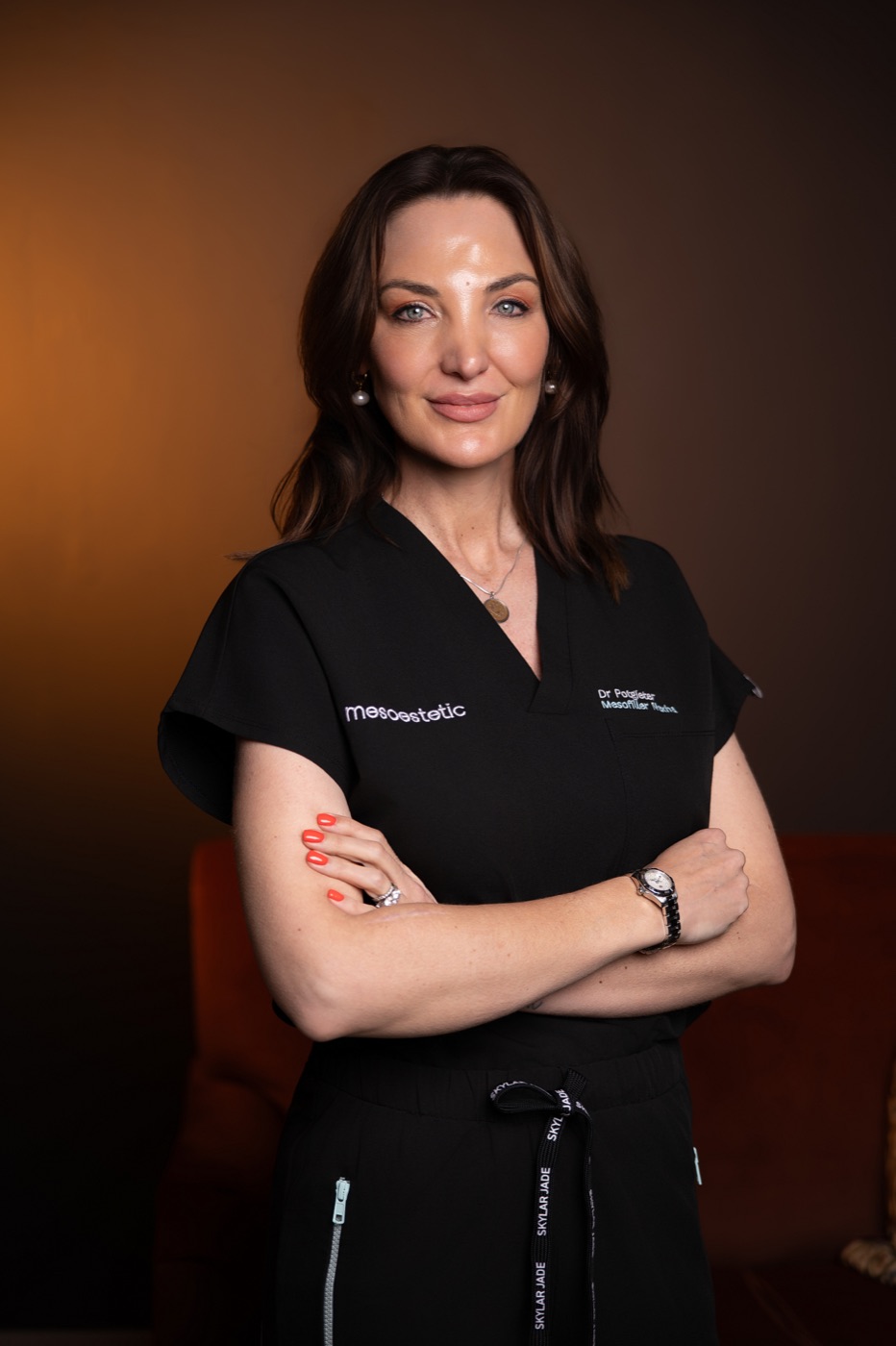
Dr Nicky Potgieter
Omnia | Medical Aesthetics, Skin Health & Wellness
Good medicine begins with better questions.
Have a question you'd like Dr Nicky to answer? Send it to the Omnia team, or book a consultation at our Hilton or Ballito practice.
Every Journal article is written or reviewed by our medical team. This is general information, not medical advice: for your skin specifically, book a consultation at our Hilton or Ballito practice.